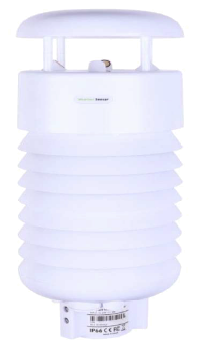
Weather is often the missing context in compost monitoring. Add onsite weather data so temperature and perimeter events are easier to interpret in real time and during after-action review.

Use weather context to improve interpretation, escalation, and communication.
Without on-site weather, operators and managers can still see alerts. With weather, they can interpret those alerts faster and explain them more clearly to internal teams and external stakeholders.
Line perimeter events up with wind direction and speed for a clearer view of what may have happened.
Understand whether recent rain, runoff, or moisture-related changes may have shaped conditions at the site.
Keep weather in the same platform as pile readings and fenceline data instead of relying on separate sources.

It is easy to position weather as part of a broader managed monitoring service because it improves interpretation across the rest of the site. The customer sees a clearer operational picture without needing a separate weather system project.
The strongest story for a compost customer is a full operating view, not isolated data streams.